Caring for Printed T-Shirts: Make Your Tees Last for Years
A great printed t-shirt is an investment in something you will wear constantly — so it is worth keeping it looking new. The good news is that making a quality tee last for years comes down to a handful of simple habits, most of which take no extra effort once they become routine. Here is exactly how to wash, dry and store your printed cotton tees so the fabric stays soft and the artwork stays crisp.
Washing: cold, inside out, and gentle
Most of the damage a t-shirt suffers happens in the wash, and almost all of it is avoidable. Three rules do the heavy lifting. First, wash cold — around 30°C or below. Hot water is the enemy of printed cotton: it fades colours, encourages shrinking, and can soften the bond that holds a print to the fabric. Cold water cleans everyday wear perfectly well and protects both the cotton and the design.
Second, turn the tee inside out before it goes in the machine. This simple step means the print faces away from the drum and the abrasion of other clothes, dramatically reducing cracking, peeling and fading over time. Third, use a gentle cycle and wash with like colours. A slower spin and softer agitation are kinder to the fabric, and separating darks from lights prevents both dye transfer and the greying that dulls a crisp white tee.
Go easy on detergent, and skip the extras. Too much detergent leaves residue that stiffens fabric and dulls prints. Fabric softener is best avoided on graphic tees — it can coat the print and the cotton, reducing breathability and, over time, the sharpness of the design. Never use bleach on a coloured or printed tee.
- Turn it inside outProtects the print from friction against the drum and other garments.
- Wash cold, gentle cycleCold water preserves both the colour and the fibres, and saves energy.
- Skip the tumble dryerHigh heat is the number-one killer of prints — air dry flat or on the line.
- Iron around, not onNever iron directly over a print; go inside out or press the surrounding fabric only.
Wash cold, inside out
30°C or below, garment turned inside out, on a gentle cycle with like colours. This alone doubles a tee’s life.
Skip the dryer
Air-dry away from direct sun. High tumble-dryer heat is the fastest way to shrink cotton and crack a print.
Never iron the print
Iron inside out on low, or steam, and always avoid pressing a hot iron directly onto the design.
Drying: air beats heat, every time
If there is one upgrade that will most extend the life of your tees, it is skipping the tumble dryer. High heat is brutal on cotton — it is the single biggest cause of shrinkage and misshapen collars, and it can cause prints to crack as the fabric contracts and expands. Air-drying is gentler, cheaper and better for the garment in every way.
Hang the tee to dry or, better still for heavier cotton, lay it flat. Hanging a very heavy wet tee for long periods can stretch the shoulders, so a flat dry or a padded hanger helps it keep its shape. Dry away from direct sunlight; strong sun fades both fabric and print. If you must use a dryer, choose the lowest heat or an air-dry setting and remove the tee while it is still slightly damp.
Ironing and storage
Printed cotton usually needs very little ironing, especially heavyweight fabric that hangs well. When you do iron, turn the tee inside out, use a low heat setting, and never run the iron directly over the print — the heat and pressure can damage it. A garment steamer is an even safer option, refreshing the fabric without any direct contact.
Storage matters more than people think. Folding tees rather than hanging them long-term avoids stretched shoulders and hanger bumps, and keeps prints from creasing under their own weight. Store them somewhere dry and out of direct light. A little organisation here keeps a favourite tee ready to wear and looking its best.
Understanding different print types
Not all prints behave the same in the wash, and knowing roughly what you are dealing with helps you care for it. Screen prints, common on quality graphic tees, lay ink onto the fabric in durable layers and, when done well, flex with the cotton and last for years. Direct-to-garment printing sprays ink directly into the fibres, giving a soft finish that feels part of the fabric; it rewards cold, gentle washing. Heat-transfer or vinyl prints sit on top of the fabric and are the most vulnerable to cracking and peeling under high heat, so they especially benefit from inside-out, low-temperature care. Whatever the method, the same golden rules apply — cold water, inside out, no high heat — so you do not need to identify the exact process to protect it.
The fabric underneath matters just as much as the ink. A premium, heavyweight combed cotton holds a print far better than a thin, loosely woven blank, because it moves less and resists the abrasion and distortion that break prints down. This is one more reason quality tees last: the whole system — good cotton, good print, good care — works together.
A simple seasonal routine
Tees live differently through the year, and a light seasonal rhythm keeps them fresh. In warmer months, when tees are worn against the skin and washed more often, lean hard on cold, gentle cycles and air-drying in the shade to prevent sun-fade — never dry a coloured tee in strong direct sunlight for hours. In cooler months, tees are often layered under shirts and jumpers and worn several times between washes, which is perfectly fine; airing a tee overnight instead of washing it after every short wear actually extends its life and saves water. When you rotate seasonal clothing, wash everything before storing, fold rather than hang, and keep tees somewhere dry and dark so they emerge next season as good as they went in.
Rotation itself is an underrated care habit. Wearing the same beloved tee constantly wears it out fast; rotating through a few means each one rests, holds its shape and lasts far longer. Think of it the way you would a good pair of shoes — rest between wears keeps them going.
Reviving and repairing a tired tee
Even well-loved tees eventually look a little tired, but many can be revived rather than retired. A cold wash with a small amount of quality detergent, followed by a proper flat air-dry, often restores softness and shape more than you would expect. For a dingy white, an occasional soak in an oxygen-based (non-chlorine) brightener — kept away from any print — can lift greying without the damage bleach causes. Bobbling on cheaper fabric can be gently removed with a fabric shaver, instantly freshening the surface.
Small repairs are worth the effort on a tee you love. A loose hem or a tiny seam split takes minutes to stitch and adds years of wear. And when a tee finally reaches the end of its wearable life, it still has value: soft cotton makes excellent cleaning cloths, and worn-out tees can be dropped at textile recycling points rather than going to landfill. Getting the full life out of a garment — and then some — is the most sustainable move of all.
Building a capsule of tees that last
The most sustainable and satisfying approach is to own fewer, better tees and look after them well. A small capsule — a couple of light and a couple of dark, in premium cotton with designs you genuinely love — will serve you better than a drawer full of cheap tees that sag and fade within a season. Buy quality once, care for it properly with cold washes and air-drying, rotate your wear, and repair the small things, and a handful of hand-drawn tees can stay in happy rotation for many years. It is better for your wardrobe, kinder to your wallet over time, and gentler on the planet.
Built to be worn to death Heavyweight, soft-washed cotton and prints made to survive the laundry — look after them and they last.
Dealing with stains and refreshing an old favourite
Treat stains promptly and gently. Blot rather than rub, and address a mark before it goes through a hot wash that can set it permanently. For most everyday stains, a little gentle stain remover applied to the area and a normal cold wash does the job — always avoiding the print itself. If a tee starts to feel a little tired, a cold wash with a small amount of quality detergent and a proper air-dry often revives it more than you would expect.
Ultimately, the quality of the tee sets the ceiling and your care habits decide how close you get to it. A premium, heavyweight cotton tee with a properly applied print is built to last — treat it with cold water, gentle cycles and air-drying, and there is no reason a design you love should not still look sharp years from now.
Key takeaways
- Inside out, cold wash, air dry — three habits that keep a printed tee looking new for years.
- Heat is the enemy: avoid hot washes, tumble drying and direct ironing on the print.
- Wash less often and spot-clean small marks to reduce wear.
- Good cotton plus gentle care easily outlasts fast-fashion tees.
Frequently asked questions
Can I tumble-dry a printed t-shirt?
You can, but it is the number-one cause of shrinkage and cracked prints. If you must, use the lowest heat or an air setting and remove the tee slightly damp. Air-drying flat or on a hanger is far kinder.
Why should I turn my tee inside out to wash it?
It shields the print from abrasion against the drum and other garments, which is what causes fading, cracking and peeling over time. It is the easiest single habit to protect a design.
Is fabric softener bad for printed tees?
It is best avoided. Softener can coat both the print and the cotton, reducing breathability and gradually dulling the design. A small amount of good detergent is all a tee needs.
How do I stop my t-shirts shrinking?
Wash cold, avoid high heat entirely, and air-dry. Heat — in both the wash and the dryer — is the main cause of cotton shrinkage, so keeping temperatures low keeps the fit consistent.
Start with a tee worth keeping
Care habits can only protect what quality built in the first place.
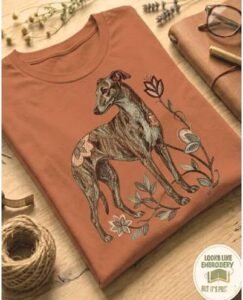
Good care extends the life of any tee, but it works best on a garment that was made to last from the start. There is a ceiling to how long thin, cheaply printed fabric will survive no matter how gently you treat it — whereas a premium, heavyweight cotton tee with a properly applied print rewards every good habit you give it. That is the standard we build to: our greyhound & whippet tees use soft-washed, heavyweight cotton and hand-drawn prints designed to move with the fabric rather than crack on top of it, so the care routine in this article actually pays off in years of wear.
If you are refreshing your rotation, it is worth investing in a few tees you genuinely love rather than a pile you are indifferent to — you will care for the ones you love, and they will last. Browse the full collection of tees to build a small capsule of light and dark options, or start with the best sellers if you want the designs that have already proven themselves in other people’s wardrobes and washing machines. A well-made tee, looked after with cold washes and air-drying, is one of the best-value pieces you can own, measured in cost per wear.
There is a nice knock-on effect to treating your tees this way, too: it quietly changes how you shop. Once you experience how long a well-made, well-cared-for tee lasts, the appeal of buying lots of cheap ones fades. You start choosing fewer, better pieces you genuinely love, wearing them for years, and repairing rather than replacing the small things. That is better for your wardrobe, gentler on your wallet over time, and far kinder to the planet than a cycle of throwaway fashion. A little care, in other words, is not just about keeping one tee looking good — it is a small shift toward owning clothes the way they were meant to be owned.
None of this takes real effort — it is just a set of gentle defaults. Wash cold and inside out, dry in the air, keep the iron off the print, and fold rather than hang. Do that, and your favourite hand-drawn tee will stay a favourite for a very long time.